

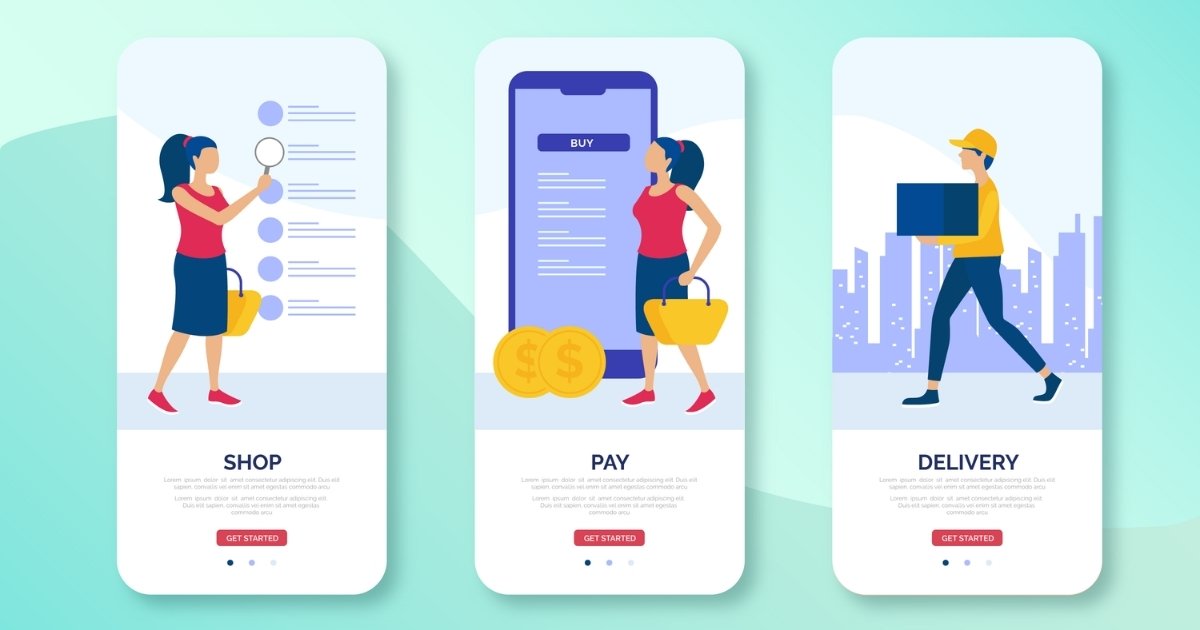
Fast delivery has become part of everyday commerce in the United States. The U.S. Census Bureau reported that retail e-commerce sales reached an estimated $326.7 billion in the first quarter of 2026, up 9.8% from the same quarter a year earlier. That growth creates strong opportunities for businesses that can connect online orders with dependable local fulfillment.
Behind every smooth delivery experience sits a complex digital system. Customers expect order tracking, accurate estimated time of arrival, quick checkout, and helpful push notifications. Meanwhile, merchants need inventory visibility and drivers need clear routes. A strong on-demand delivery app development strategy brings these moving parts together without making the experience feel complicated.
What Is Delivery App Development?

At its core, delivery app development means creating software that manages the journey from an order to its final destination. A typical platform connects a customer app, merchant interface, driver application, and admin dashboard through a shared backend. Each side sees the information it needs while the system keeps orders, payments, locations, and delivery status synchronized.
The real value goes beyond placing an order. Modern platforms combine order management, live location tracking, secure checkout, dispatch rules, and communication tools. A restaurant might use food delivery app development to coordinate meals and drivers. A retailer could use grocery delivery app development to synchronize stock, substitutions, picking, and delivery windows.
How Does a Delivery App Work?
Think of the platform as a digital relay race. A customer completes order placement, the merchant confirms order preparation, and the dispatch engine finds an available courier. The delivery driver app then provides route guidance while the customer receives real-time delivery tracking and status updates. Once the package arrives, proof of delivery closes the transaction.
Types of Delivery Apps
Different industries need different workflows. A restaurant rarely needs the same operational logic as a medical courier or furniture retailer. Choosing the right model early helps control development complexity because each business type introduces different inventory rules, delivery windows, vehicle requirements, and customer expectations.
The biggest categories include restaurant delivery, grocery delivery, retail fulfillment, courier services, parcel transportation, and multi-service marketplaces. A courier delivery app may focus on pickup requests and proof of delivery. A parcel delivery app often requires shipment labels, scanning, tracking events, and business accounts.
Food Delivery Apps
Restaurants need speed because food quality can decline during a long trip. food delivery app development usually combines menus, restaurant availability, preparation times, driver dispatch, tipping, payment processing, and customer communication. The system can also coordinate pickup timing so drivers don’t arrive too early or wait unnecessarily.
Grocery and Retail Delivery Apps
Groceries create a different puzzle because inventory can change minute by minute. grocery delivery app development therefore needs strong inventory tracking, substitution rules, picking workflows, delivery scheduling, and location-based availability. Retail systems may also connect warehouses, stores, and local fulfillment centers to shorten the distance between products and customers.
Courier and Package Delivery Apps
Courier services revolve around speed, visibility, and predictable handoffs. courier app development can support scheduled pickups, urgent jobs, multiple stops, driver verification, signatures, photos, and delivery exceptions. A courier app becomes particularly useful when businesses need to manage recurring commercial deliveries instead of individual consumer orders.
On-Demand and Multi-Service Delivery Apps
An on-demand delivery platform can serve several categories from one application. Customers might order meals at noon, groceries later, and retail products in the evening. A multi-service delivery platform needs flexible product models, category rules, merchant controls, location logic, and dispatch workflows that can handle different service requirements.
Key Features of a Delivery App
The best delivery app features solve operational problems rather than simply filling a screen with buttons. Customers need clarity and speed. Drivers need accurate assignments and navigation. Merchants need control over orders and stock. Administrators need a central view of performance, disputes, payments, and system health.
A mature platform often combines secure payments, payment gateway integration, digital wallets, and customer communication with deeper operational functions. Behind the interface, delivery management software can coordinate dispatch, pricing, driver availability, delivery zones, and business rules. This creates one connected workflow instead of several isolated tools.
Customer App Features
The customer side should make discovery, checkout, and delivery status feel effortless. Essential functions include order placement, address management, order history, saved payment methods, ratings and reviews, and customer support. A polished experience can also provide in-app chat, delivery instructions, discounts, and flexible delivery scheduling.
Driver App Features
Drivers need a focused interface because they often use the application while moving between locations. A reliable delivery driver app should support courier registration, courier verification, job acceptance, navigation, status changes, earnings, and proof of delivery. Clear buttons matter here because unnecessary taps can become dangerous distractions.
Admin and Merchant Features
Operations become much easier when businesses have a capable merchant app and admin panel. The merchant interface can manage menus, products, stock, preparation times, and incoming orders. The administrative side can control users, drivers, refunds, pricing, service zones, promotions, and dispute resolution from one central workspace.
Advanced Delivery App Features
Advanced platforms increasingly use AI-powered dispatch to match orders with suitable drivers. Demand forecasting can help predict busy periods before they arrive. Dynamic pricing can then respond to demand, distance, availability, or delivery urgency. Other sophisticated functions include fraud scoring, automated support, personalized offers, and predictive delivery estimates.
How to Choose the Right Tech Stack

A good delivery app technology stack should match the business model rather than follow a fashionable trend. A small regional service may prioritize development speed and lower maintenance costs. A nationwide marketplace may need stronger observability, distributed processing, caching, and independent scaling for different services.
For the mobile layer, Flutter and React Native can support cross-platform development. Native Swift or Kotlin applications may make more sense when a project requires deep platform-specific capabilities. On the server side, Node.js works well for event-heavy applications while Python can support data services and intelligent logistics workflows.
Recommended Technologies for Delivery Apps
The backend can use PostgreSQL for transactional data, MongoDB where flexible document structures make sense, and Redis for fast caching or temporary state. Cloud infrastructure can run through AWS or Google Cloud. Mapping and routing services can connect through the Google Maps API to support addresses, routes, distances, and navigation.
A sensible stack also depends on traffic patterns and team expertise. The delivery app backend should expose clean APIs for mobile clients, merchants, dispatch services, payments, and analytics. An API-first design makes future integrations easier because new services can communicate through defined interfaces rather than tightly coupled application code.
Delivery App Architecture and Scalability
Strong delivery app architecture becomes increasingly important as order volume grows. A local application may handle hundreds of daily orders without much strain. A national marketplace can generate thousands of location updates, payment events, order changes, and dispatch decisions within a short period. The architecture must absorb these bursts without becoming sluggish.
A microservices architecture can separate major functions such as orders, payments, users, dispatch, notifications, and tracking. A modular architecture can offer similar separation with fewer operational demands for smaller teams. AWS describes modularity as a way to make complex systems easier to scale, secure, and manage.
Real-Time Tracking and Dispatch Architecture
Location systems constantly process GPS coordinates as drivers move. The platform can combine these signals with traffic, delivery windows, driver capacity, and order priority. A delivery dispatch system then decides which driver should handle each job. Google’s routing tools can optimize waypoint order while considering travel time, distance, and turns.
How to Build a Delivery App

Building a delivery product works best as a staged process. Starting with every imaginable feature can burn money before the business model has proved itself. A focused delivery app MVP should solve the core delivery problem first. Once real users provide evidence, the product can expand with more advanced automation.
The development process normally moves through discovery, UX design, architecture, development, integration, testing, launch, and ongoing improvement. custom delivery app development gives businesses greater control over workflows and integrations. A white-label delivery app can reduce initial effort when standard functionality already matches the business model.
Step 1: Define the Business Model and Requirements
First, define who orders, who fulfills orders, who delivers them, and who pays whom. Then map the complete workflow from order placement through fulfillment. Requirements should cover delivery zones, fees, driver rules, cancellations, refunds, service hours, inventory behavior, and business accounts before development begins.
Step 2: Design the UI/UX
Good design removes hesitation. The customer should understand what happens after checkout without hunting through menus. Drivers need large, clear actions for job acceptance, navigation, pickup confirmation, and delivery completion. Merchants need fast order screens because kitchen or warehouse staff often work under pressure.
Step 3: Develop the MVP
The first release should concentrate on the smallest feature set that can support real transactions. A restaurant MVP might include registration, menus, checkout, payments, dispatch, tracking, and delivery confirmation. Launching this focused version creates measurable evidence before expensive advanced systems enter the product.
Step 4: Integrate APIs and Third-Party Services
A delivery platform rarely operates alone. It may need payment providers, maps, identity verification, SMS, email, analytics, and notification services. API integration connects these external capabilities to the core system. Each integration also needs error handling because a third-party outage shouldn’t silently corrupt orders or payment records.
Step 5: Test the Delivery Application
Testing must mirror real delivery conditions rather than stop at basic screen checks. Teams should test payment failures, poor connectivity, GPS drift, duplicate orders, driver cancellations, heavy traffic, expired sessions, and unexpected API responses. fraud prevention and security testing deserve special attention because delivery platforms handle valuable customer and payment data.
Step 6: Launch and Maintain the App
Launch day is the beginning of operational learning. Analytics should monitor conversion, failed payments, late deliveries, cancellation rates, driver acceptance, and customer complaints. A dependable release process then handles fixes and improvements without disrupting active orders. Regular monitoring also reveals bottlenecks that aren’t obvious during development.
Delivery App Development Cost and Timeline
The delivery app development cost depends on scope rather than one universal price. A basic local MVP may require relatively modest functionality. A nationwide marketplace with multiple user applications, advanced routing, automated dispatch, analytics, and enterprise integrations can become considerably more expensive. Team location, platform count, design depth, and testing also influence the final budget.
A useful planning approach is to divide the project into functional layers. The following table gives relative planning ranges rather than fixed vendor quotes. Actual delivery app development cost should come from detailed requirements, technical architecture, integrations, and expected traffic.
| Project Area | Basic MVP | Mid-Level Platform | Advanced Platform |
| UI/UX Design | Low | Medium | High |
| Customer Experience | Basic | Advanced | Highly Personalized |
| Driver Tools | Basic | Advanced | Intelligent |
| Dispatch | Manual/Simple | Automated | AI-Assisted |
| Tracking | Basic GPS | Real-Time | Predictive |
| Integrations | Few | Several | Extensive |
| Analytics | Basic | Business-Level | Advanced |
| Architecture | Modular | Scalable | Distributed |
| Testing | Standard | Broad | Enterprise-Level |
What Affects Development Time?
A simple delivery app MVP may take several months when design, backend work, integrations, testing, and store preparation are included. Larger platforms can require substantially more time because multiple applications must evolve together. Real-time tracking, complex dispatch rules, custom payments, and enterprise integrations often create the longest technical workstreams.
How Do Delivery Apps Make Money?
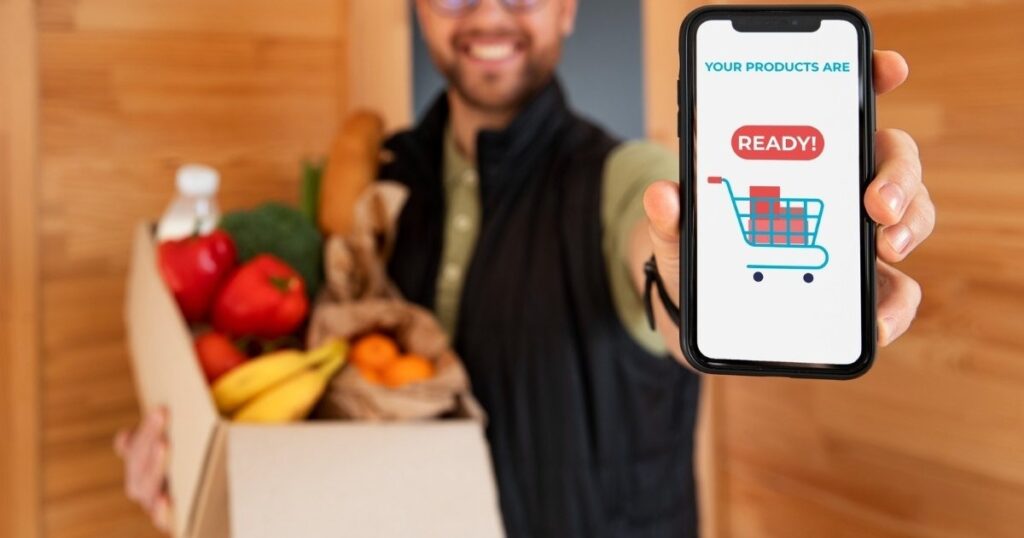
A strong business model matters as much as strong software. delivery app monetization can combine customer fees, merchant commissions, subscriptions, advertising, premium delivery options, and business accounts. The right combination depends on order frequency, average order value, delivery costs, customer acquisition expenses, and the competitive environment.
For example, a marketplace could charge merchants a percentage of each transaction while customers pay a modest delivery fee. Another company might offer subscription plans that reduce individual delivery charges. loyalty programs can then encourage repeat purchases. The goal isn’t simply to collect more fees. It is to create sustainable unit economics.
Delivery Fees and Service Charges
Delivery fees can depend on distance, order value, time, location, or service speed. A platform may offer standard delivery alongside priority delivery. Clear pricing matters because surprise charges can damage conversion. pricing and commission rules should remain transparent across customer and merchant interfaces.
Commission-Based Revenue
Marketplace operators often earn through merchant commissions. The percentage may vary by service level, promotional agreement, or merchant category. Restaurants and retailers may accept commissions when the platform provides valuable demand, payments, logistics, and customer acquisition. The model works best when both sides can clearly see the economic value.
Subscription and Membership Plans
Recurring memberships can make frequent delivery more attractive. Customers might pay monthly for reduced fees or premium delivery benefits. Businesses can also purchase commercial plans with reporting, priority support, or centralized billing. subscription plans work particularly well when customers place orders often enough to perceive consistent savings.
Advertising and Sponsored Listings
Once a platform has meaningful traffic, merchants may pay for better visibility. Sponsored products, promoted restaurants, and featured storefronts can create another revenue stream without changing the core delivery workflow. Advertising should remain relevant because excessive promotion can turn a useful marketplace into a noisy digital billboard.
Dynamic Pricing and Additional Revenue Streams
Additional income can come from priority delivery, business accounts, white-label services, and premium logistics. A platform can also apply dynamic pricing during periods of unusual demand. However, pricing logic needs careful testing because excessive surcharges can frustrate customers and push them toward competing services.
Challenges in Delivery App Development
Delivery systems face a strange contradiction: customers want the experience to feel simple while the underlying technology handles complicated events. A driver can lose connectivity. A merchant can run out of stock. Traffic can suddenly change. A customer can enter an inaccurate address. The system must handle these situations without losing the original order state.
Another challenge is delivery app scalability. More users mean more orders, but they also mean more location updates, notifications, API requests, payment events, and analytics data. A scalable delivery management system needs efficient databases, caching, asynchronous processing, monitoring, and carefully controlled third-party API usage.
Real-Time GPS Accuracy
GPS isn’t perfect in dense cities, underground parking areas, tall buildings, or locations with weak signals. The application should therefore avoid treating every location reading as absolute truth. Combining multiple signals and applying sensible update rules can produce more stable GPS delivery tracking.
Route Optimization
The shortest route isn’t always the best route. Delivery systems may need to consider traffic, vehicle capacity, delivery windows, driver hours, road restrictions, and priority orders. Google’s Route Optimization API supports objectives such as travel efficiency, on-time arrival, vehicle cost, and load balancing.
Security and Fraud
Delivery platforms process addresses, phone numbers, account details, and payment information. Strong authentication, encryption, authorization, secure session handling, and payment-token practices help reduce risk. payment processing should also use established providers where appropriate instead of storing sensitive card information unnecessarily.
Third-Party Dependencies
Maps, payments, messaging, and identity services can accelerate development. They can also become dependencies. A mature architecture should define clear fallbacks and failure states. If a mapping request fails, for example, the order shouldn’t disappear. The customer should still see a meaningful status and the operations team should receive an alert.
Best Practices for Delivery App Development
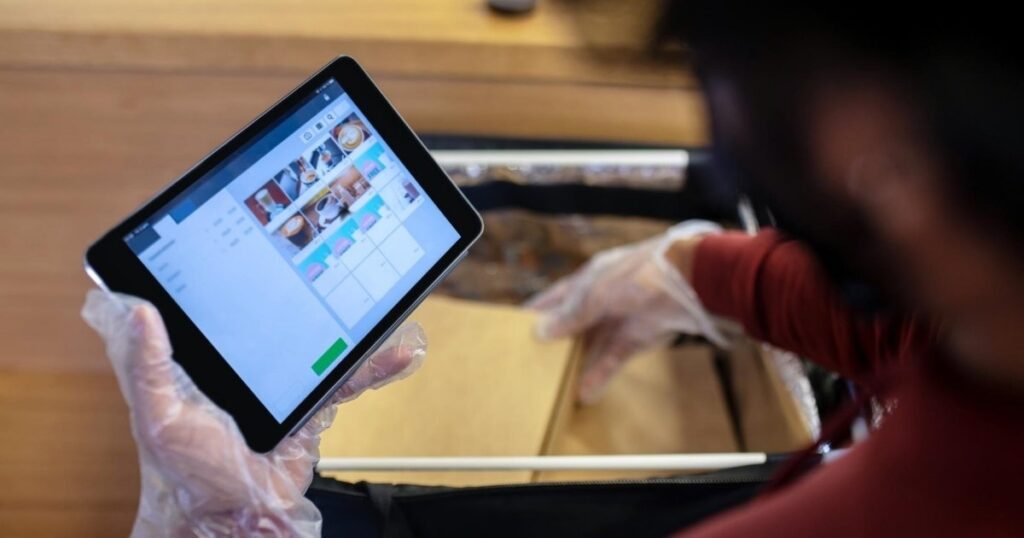
Successful delivery app development starts with the customer journey and works backward into the technology. Keep checkout short, make tracking obvious, and give drivers only the information they need at each stage. Accessibility also matters because a delivery service serves people with different abilities, devices, connection speeds, and digital habits.
Security and observability should exist from the beginning rather than appear after the first incident. Use automated testing, structured logging, performance monitoring, access controls, backups, and controlled deployments. Cloud infrastructure can provide flexible resources while database scalability helps the platform handle growing transaction volume without redesigning the entire data layer.
Build Around Real Operational Data
The smartest improvements often come from actual delivery behavior. Measure preparation delays, driver wait times, route deviations, cancellation patterns, failed payments, and customer complaints. Delivery analytics can reveal where the experience breaks down. A five-minute delay at a restaurant may look small on one order but become expensive across thousands of daily deliveries.
Design for Future Growth
Architecture should leave room for new cities, merchants, delivery zones, and service categories. An event-driven architecture can separate important events such as order creation, payment confirmation, driver assignment, and delivery completion. That separation makes it easier to add notifications, analytics, fraud checks, and other services without rewriting the entire platform.
Protect the User Experience
Technology should disappear into the background. Customers shouldn’t need to understand dispatch queues, API calls, or routing engines. They simply need to know whether their order was accepted, where it is, and when it should arrive. real-time communication should provide useful updates without overwhelming users with unnecessary notifications.
Support Different Markets
A platform designed for US expansion may eventually serve customers across languages, regions, or currencies. Multi-language support and multi-currency support can make international expansion easier when the business reaches that stage. However, these capabilities should follow actual market needs instead of adding unnecessary complexity to the first release.
Use a Modular Product Roadmap
A sensible roadmap might begin with ordering and payments, then add tracking and dispatch, followed by analytics and automation. This approach keeps development focused while preserving room for growth. The result is a practical delivery management software ecosystem that can evolve with the business rather than becoming an oversized first release.
Conclusion
A modern delivery business is much more than a mobile ordering screen. It is a connected ecosystem involving customers, merchants, drivers, payments, maps, dispatch logic, analytics, and support. Strong delivery platform development brings these components together while keeping the experience fast and understandable for everyday users.
For US businesses, the best strategy is to match technology with actual operational needs. Start with a focused product, build a dependable backend, protect customer data, and use automation where it creates measurable value. With thoughtful custom delivery app development, a business can turn fragmented delivery operations into a scalable digital service.
FAQs
1. How much does delivery app development cost?
The cost depends on features, platforms, integrations, design, and backend complexity.
A basic MVP costs less than a large marketplace with advanced tracking and dispatch.
2. How long does it take to build a delivery app?
A basic delivery app can take several months from planning through launch. Complex platforms need more time for integrations, testing, scalability, and advanced features.
3. What features should a delivery app have?
Essential features include order tracking, secure payments, GPS tracking, notifications, driver management, and customer support.
4. Which technology is best for delivery app development?
The best technology depends on the app’s requirements, budget, and expected scale.
5. Can a delivery app support multiple businesses?
Yes, a delivery platform can connect multiple restaurants, retailers, couriers, or service providers.

Welcome to The Tech Millon! I’m Ethan Clark, an AI-Powered SEO and Content Writer with 4 years of experience. I help websites rank higher, grow traffic, and look amazing. My goal is to make SEO and web design simple and effective for everyone. Let’s achieve more together!