


The transportation business has changed dramatically as customers move from phone-based bookings to mobile platforms. In the USA, riders expect quick pickups, clear fares, secure payments, and accurate arrival times from every taxi booking app they use.
A modern taxi app development company builds more than a booking screen. It creates a connected system for passengers, drivers, dispatch teams, payments, and business owners. Current taxi platforms increasingly combine live tracking, upfront fares, scheduling, payments, and communication tools.
Why Invest in Taxi App Development?

The strongest opportunity comes from convenience. Customers can request a vehicle without calling a dispatcher, while operators can manage bookings and driver availability from one place. Taxi app development can also create a direct digital channel between a transportation brand and its customers.
For operators, on-demand taxi app development can improve fleet utilization and reduce manual work. A well-built platform can support scheduled rides, corporate accounts, promotions, commissions, and multiple service areas. It can also turn operational data into useful insights about demand, cancellations, and driver availability.
Business Opportunities
A scalable taxi booking platform can support local fleets as well as growing transportation companies. For example, an operator may begin in one city and later add new service zones without rebuilding the entire platform. This makes digital infrastructure a long-term business asset rather than a short-term booking tool.
What Does a Taxi App Development Company Do?
A professional development partner handles the complete product lifecycle. This usually includes planning, UI/UX design, coding, testing, integrations, deployment, and maintenance. The goal is to create a reliable system that works smoothly for every participant in the transportation ecosystem.
A complete platform normally contains a passenger application, driver application, and admin dashboard. The passenger side handles bookings and payments. The driver side manages trips and navigation. Meanwhile, the administration layer controls users, pricing, vehicles, reports, and daily operations.
Development and Integration Services
Experienced taxi app developers also build the technical foundation behind the applications. Their work can involve backend development, cloud infrastructure, databases, authentication, notifications, maps, and payment services. Strong taxi app development services should also include testing and post-launch improvements.
Top Taxi App Development Companies
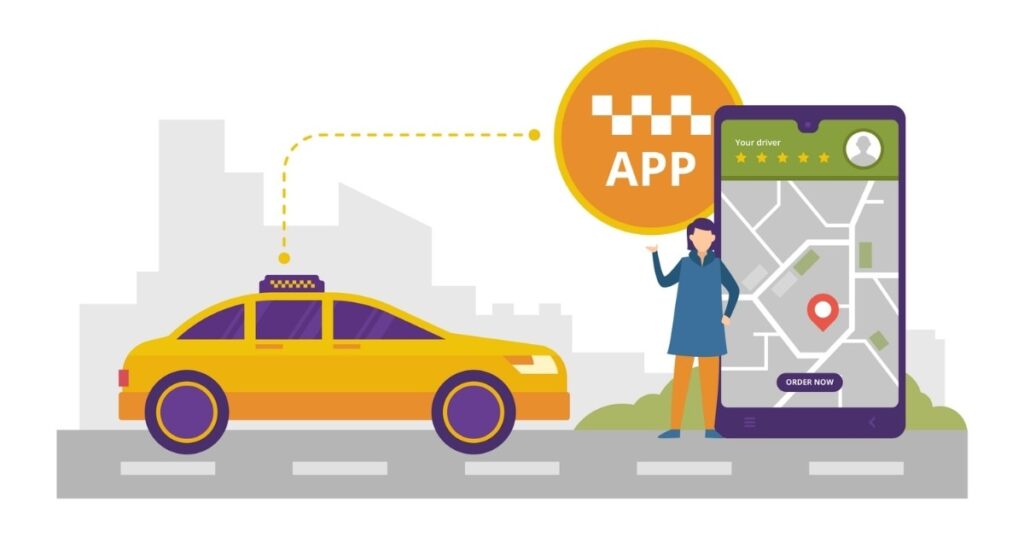
Choosing among development providers requires careful research. A company may advertise taxi solutions while having limited experience with real-time dispatch or geolocation systems. Portfolio quality, technical depth, communication, scalability, and support should therefore carry more weight than marketing claims.
The following companies are worth considering during an initial market comparison. They represent different strengths across mobility, mobile development, backend engineering, cloud services, and custom software. Every business should independently verify current portfolios, pricing, contracts, and technical capabilities before selecting a provider.
| Company | Key Strength | Potential Use |
| Suffescom Solutions | Mobility solutions | Taxi and ride-hailing platforms |
| Wildnet Edge | Enterprise development | Transportation ecosystems |
| Lets Nurture | Cross-platform development | On-demand mobility |
| CKDigital Infosolutions | Custom software | Fleet and booking systems |
| Appoks Infotech | Mobile development | Taxi applications |
| Risingmax | Cloud-oriented development | Mobility platforms |
| Hyperlink InfoSystem | Large development resources | Enterprise applications |
| Blocktunix | Technology integrations | Ride-sharing solutions |
Company Evaluation
The best provider depends on the project’s actual requirements. A startup may prioritize speed and MVP development while an established fleet may need complex dispatching and taxi fleet management software. Comparing technical proposals side by side can reveal major differences that a simple price comparison may hide.
Essential Features of a Taxi Booking App
The best taxi app features solve real customer problems. Riders need simple booking, transparent prices, accurate locations, and dependable payment options. Drivers need quick controls that don’t distract them during trips. Operators need centralized tools for managing the entire marketplace.
A strong passenger app can include instant booking, fare estimation, ride scheduling, and real-time GPS tracking. Riders can also benefit from digital payments, ratings and reviews, ride history, and trip notifications. These functions create transparency from booking through trip completion.
Driver and Admin Features
The driver experience requires equal attention. Useful tools include driver earnings, an availability toggle, navigation, trip requests, and status updates. Meanwhile, an admin dashboard can provide fleet management, commission management, pricing controls, user management, and an analytics dashboard.
| Platform | Important Functions |
| Passenger App | Booking, tracking, payments, ratings |
| Driver App | Requests, navigation, earnings, availability |
| Admin Panel | Fleet, pricing, users, analytics |
How Taxi App Development Works
The taxi app development process starts with business discovery rather than programming. Teams define the service area, customer types, pricing model, fleet structure, booking rules, and growth plans. This stage prevents developers from building expensive features that don’t support the actual business model.
Next comes design and engineering. Mobile app development creates the passenger and driver experiences while backend systems manage bookings, matching, pricing, payments, and accounts. Geolocation APIs and mapping services connect vehicles with passengers. Real-time data synchronization keeps trip information current across devices.
Testing and Launch
Testing must cover more than visual defects. Teams should examine GPS accuracy, failed payments, weak networks, device compatibility, authentication, permissions, and unusual booking scenarios. Agile development can help teams improve the product through smaller development cycles before production cloud deployment.
A dependable platform also needs a scalable backend from the beginning. When thousands of riders request vehicles during an event or rush period, weak infrastructure can cause delays and failed bookings. Proper architecture helps high-traffic applications remain responsive as demand increases.
Cost of Taxi App Development
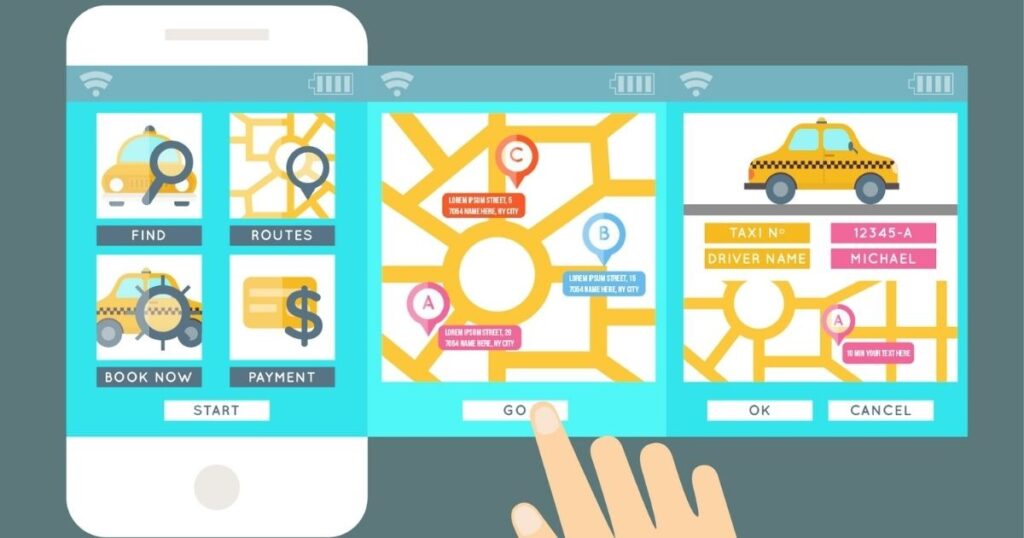
The taxi app development cost depends on the product’s complexity. A basic MVP needs fewer screens, integrations, and backend rules than an enterprise platform supporting several cities. Development location, technology choices, security requirements, and third-party services also influence the final budget.
For a US-focused project, a basic MVP may cost around $20,000–$50,000. A more advanced platform can reach $50,000–$100,000 or more. Enterprise systems with complex automation, extensive integrations, and multi-city operations may exceed $100,000.
| App Level | Approximate Cost | Typical Scope |
| Basic MVP | $20,000–$50,000 | Booking, GPS, payments, admin |
| Mid-Level | $50,000–$100,000+ | Advanced dispatch and analytics |
| Enterprise | $100,000+ | Multi-city and complex integrations |
What Changes the Budget?
Custom taxi app development usually requires a larger investment than a basic template because workflows are built around specific business rules. Separate iOS and Android applications, advanced dispatching, payment systems, maps, analytics, security, and third-party services can all increase development effort.
Ongoing expenses also deserve attention. Cloud hosting, mapping requests, SMS messages, payment processing, monitoring, and maintenance can continue after launch. A realistic budget should therefore include both initial development and long-term operational costs.
How to Choose a Taxi App Development Company
The right partner should understand transportation technology at a practical level. Look for experience with dispatching, location services, payment systems, driver workflows, and marketplace logic. A general software portfolio is useful, but relevant mobility experience provides stronger evidence of domain knowledge.
Technology choices matter too. Ask whether the proposed taxi software development approach supports real-time communication, integrations, analytics, and future expansion. Strong API integration and third-party API integration can prevent problems when maps, payments, messaging, identity checks, and other services need to work together.
Compare Support and Ownership
Don’t judge providers by price alone. Review development milestones, communication processes, security responsibilities, maintenance terms, source-code ownership, intellectual property, testing, and post-launch support. A cheaper proposal can become expensive if important functionality appears later as an unexpected change request.
| Evaluation Area | What to Review |
| Portfolio | Relevant mobility projects |
| Technology | Scalable and maintainable architecture |
| Security | Authentication and data protection |
| Integrations | Maps, payments, messaging, APIs |
| Support | Maintenance and updates |
| Ownership | Source code and intellectual property |
Latest Trends in Taxi App Development

Artificial intelligence is becoming a major part of modern mobility software. AI route optimization can analyze traffic, trip patterns, and demand signals to improve dispatch decisions. Predictive systems may eventually help operators position vehicles before demand peaks instead of simply reacting to new bookings.
Electric transportation is another important direction. Electric vehicle integration can connect fleet systems with battery levels, charging schedules, and trip planning. Meanwhile, subscription ride models can give frequent commuters predictable pricing. These models can create recurring revenue while encouraging customers to stay within one transportation ecosystem.
Smarter Mobility Experiences
The next wave of platforms may also use voice-enabled booking and stronger automation. Voice commands can reduce booking friction for customers. At the same time, autonomous vehicle technology is moving closer to commercial transportation in several markets, making flexible software architecture increasingly valuable.
Modern mobility platforms are also expanding beyond simple rides. Large transportation businesses are exploring broader digital ecosystems, including travel services, memberships, and additional on-demand services. This trend suggests that transportation app development will increasingly connect multiple services through one customer experience.
Conclusion
A successful taxi platform needs more than an attractive interface. It requires reliable dispatching, accurate GPS, secure payments, smooth communication, and a scalable backend. The right technology can help transportation businesses improve operations while delivering a faster experience for passengers and drivers.
Choosing the right taxi app development company can shape the platform’s performance, scalability, and long-term value. With AI, electric fleets, digital payments, and smarter mobility services gaining momentum, businesses need flexible taxi app development solutions that can adapt as customer expectations evolve.
FAQs
How much does taxi app development cost?
Taxi app development can cost from $20,000 for a basic MVP to $100,000+ for an enterprise platform, depending on features and complexity.
How long does it take to build a taxi app?
A basic taxi app may take three to five months, while advanced platforms with complex integrations can require six months or longer.
What features should a taxi booking app include?
Essential features include GPS tracking, instant booking, fare estimation, online payments, driver management, ratings, notifications, and an admin dashboard.
Can a taxi app operate in multiple cities?
Yes. A scalable backend can support multiple cities with separate fleets, pricing rules, service areas, and administrative controls.
How do I choose a taxi app development company?
Check its transportation portfolio, technical expertise, security practices, integration capabilities, pricing, communication process, and post-launch support.

Welcome to The Tech Millon! I’m Ethan Clark, an AI-Powered SEO and Content Writer with 4 years of experience. I help websites rank higher, grow traffic, and look amazing. My goal is to make SEO and web design simple and effective for everyone. Let’s achieve more together!