

In any sector, accounting firms deal with some of the most sensitive data. From tax documents to banking records, a single security gap can expose valuable client data. That is why cybersecurity for accounting firms has become a business necessity rather than an IT concern. Modern attackers use advanced methods to target firms of all sizes, especially during busy seasons.
Strong accounting firm cybersecurity helps protect financial records, maintain client trust, and reduce operational risks. By following proven security measures, firms can improve financial data protection, strengthen client data protection, and build reliable secure accounting systems that safeguard both their reputation and long-term growth.
Why Cybersecurity Matters for Accountants

Accountants manage huge amounts of sensitive information every day. Strong accounting firm cybersecurity protects businesses from lawsuits, financial losses, and reputation damage. One security mistake can affect hundreds of clients at once.
Good financial data protection also helps firms meet legal obligations. Customers anticipate that their data will be kept confidential. Strong security practices build trust and support long-term business growth.
Common Cyber Threats Facing Accounting Firms
Modern accounting cyber threats have become more advanced. Criminals now use AI-driven phishing, phishing attacks, smishing, vishing, deepfake audio, and deepfake video to trick employees into revealing sensitive information.
Another major risk is ransomware. Many criminals now use ransomware-as-a-service (RaaS) to launch attacks. They often steal files first and then demand payment to avoid exposing confidential data.
Why Accountants Are Prime Targets for Cybercriminals
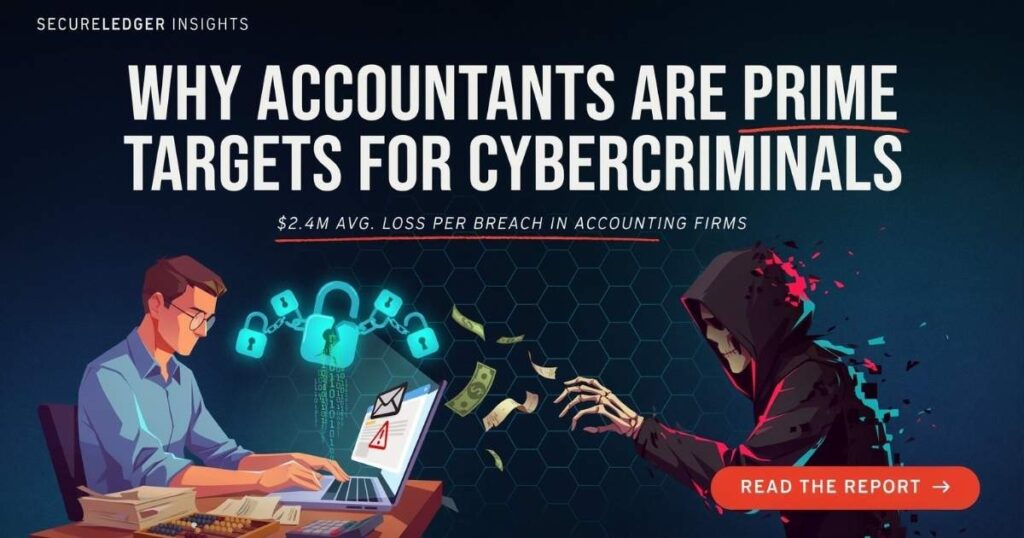
Accountants are attractive targets because they have direct access to financial systems. Criminals seek stolen credentials that provide entry to client accounts and internal systems.
Busy periods like tax season create additional opportunities for attackers. Employees work quickly and may overlook suspicious emails. This raises the risk of cyberattacks for accountants and increases the likelihood of human error.
How Cybersecurity Risks Impact Financial Data
A security breach can expose years of financial records. Firms may lose client trust and face expensive recovery costs. Strong accountant data security reduces these risks and protects sensitive information.
Data breaches also trigger legal consequences. Companies may face audits, penalties, and breach notification obligations. This makes client data protection a critical business function.
| Risk | Possible Impact |
| Data theft | Client trust loss |
| Ransomware | Business downtime |
| Phishing | Financial fraud |
| Vendor breach | Regulatory penalties |
| Weak passwords | Unauthorized access |
Essential Cybersecurity Best Practices for Accountants

Every accounting firm should activate multifactor authentication (MFA) and create strong password policies. These simple steps stop many attacks before they begin.
Successful firms also invest in cybersecurity best practices for accountants, including employee education, software updates, and access controls. Frequent security awareness training considerably reduces risk.
How to Protect Client and Financial Information
Never send sensitive documents through normal email. Instead, use secure document sharing and a secure client portal. These tools provide better protection for confidential files.
Firms should also use encryption in transit and encryption at rest. Even if criminals intercept data, encryption makes it extremely difficult to read.
Cybersecurity Tools Every Accountant Should Use
Modern firms need reliable accounting security solutions. Password managers, antivirus software, and endpoint protection tools help secure business operations.
Cloud solutions also play an important role. Secure cloud hosting platforms offer 24/7 monitoring, backups, and advanced security features that many firms cannot build internally.
| Tool | Purpose |
| Password Manager | Protects passwords |
| MFA Application | Adds extra login security |
| VPN | Protects remote access |
| EDR Software | Detects threats |
| Secure Client Portal | Protects document sharing |
How to Build a Cybersecurity Strategy for Your Firm
Every business needs a clear cybersecurity strategy for accounting firms. Start by identifying valuable assets and assigning responsibilities to team members.
A strong plan should include incident response, vendor management, employee training, and regular audits. Effective accounting firm risk management reduces vulnerabilities before criminals exploit them.
How to Assess Your Accounting Firm’s Security Risks
Risk assessments help firms discover hidden weaknesses. Review employee access, software updates, and vendor permissions regularly.
Strong accounting compliance security also requires reviewing third-party vendor risk, data storage systems, and security policies. Small improvements can prevent major disasters.
What to Do After a Cybersecurity Incident

Act quickly after an attack. Isolate affected systems and notify internal teams immediately. Next, look at where the breach originated.
Your backup and recovery plan should restore operations quickly. Review failures and strengthen controls to prevent similar incidents in the future.
Conclusion
Cyber threats are becoming more advanced every year, which makes cybersecurity for accountants a top priority. By safeguarding sensitive financial data, businesses may prevent expensive breaches and uphold customer confidence. By improving accounting firm cybersecurity, following cybersecurity best practices for accountants, and strengthening financial data protection, accountants can reduce security risks and protect daily operations.
Regular training, secure tools, and proactive planning create a stronger defense against attacks. Firms that invest in client data protection today will be better prepared to safeguard their reputation and ensure long-term business success.
FAQs
What is cybersecurity for accountants?
Cybersecurity for accountants refers to the technologies, policies, and practices used to protect financial information, client records, and accounting systems from cyberattacks.
Why are accounting firms frequently targeted?
Accounting firms store highly valuable financial information that criminals can sell, exploit, or use for fraud.
What are the biggest cyber threats for accountants?
The biggest threats include phishing, ransomware, credential theft, social engineering, and third-party vendor breaches.
How can accountants protect client information?
Use MFA, encryption, secure portals, employee training, and regular security assessments.
What regulations should accounting firms follow?
U.S. firms should review the FTC Safeguards Rule, IRS Security Six, and other cybersecurity compliance requirements.

Welcome to The Tech Millon! I’m Ethan Clark, an AI-Powered SEO and Content Writer with 4 years of experience. I help websites rank higher, grow traffic, and look amazing. My goal is to make SEO and web design simple and effective for everyone. Let’s achieve more together!